Table of Contents
ToggleA dental cavity is a permanent hole in your tooth caused by decay, and it occurs when harmful bacteria weaken enamel over time. Understanding what is dental cavity, and how to prevent it, is one of the most effective ways to protect your oral health for life. Cavities are extremely common, but with the right habits and the guidance of a skilled dentist in Brampton, prevention is absolutely possible.
Healthy teeth allow you to chew comfortably, speak clearly, and smile confidently. At Mayfield Dental Clinic, we specialize in dental cavity prevention for families and professionals across Mayfield West, Heart Lake, Bramalea, and Castlemore. In this blog, we break down how cavities form, warning signs, prevention strategies, and what to expect if you need a cavity filling in Brampton.
Quick Answer Summary
- A dental cavity is a small hole in the tooth caused by bacteria and enamel breakdown.
- Cavities form when plaque, sugars, and acids weaken enamel over time.
- Early signs include sensitivity, discoloration, and rough spots on the tooth.
- Prevention includes brushing twice daily, flossing, fluoride use, and limiting sugary snacks.
- Regular checkups with a skilled dentist help detect and treat cavities early.
- If needed, a cavity filling in Brampton restores the tooth and prevents further damage.
What Is a Dental Cavity?
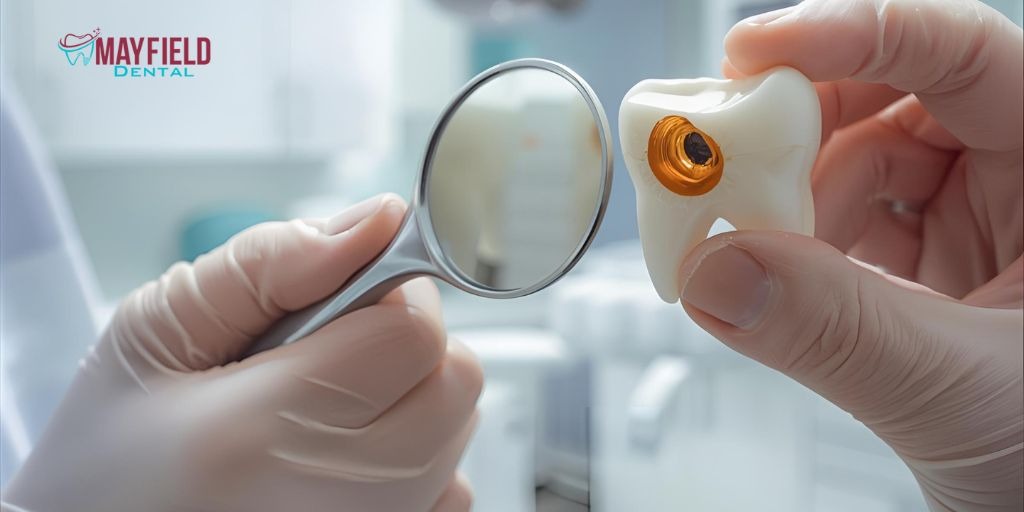
Anatomy of a Tooth: Enamel, Dentin & Pulp
Before understanding decay, it helps to understand the tooth’s layers.
Key points about tooth structure:
- Enamel is the strongest substance in the body and your tooth’s first line of defense.
- Dentin, beneath enamel, is softer and more vulnerable; once decay reaches it, damage accelerates.
- Pulp contains nerves and blood vessels; if decay reaches this layer, pain or infection can occur.
Keeping enamel strong is the foundation of cavity prevention.
How Cavities Form — From Plaque to Decay
Cavities build slowly through repeated acid exposure.
Here’s how the decay process works:
- Bacteria in the mouth feed on sugars and starches, producing acid.
- Acid attacks enamel, causing mineral loss, often seen as white chalky spots.
- Without intervention, the enamel breaks down, and a cavity forms.
- The cavity deepens into dentin, eventually reaching the pulp if left untreated.
“A cavity rarely starts as a big problem; it starts as a tiny moment of neglect,” explains Dr. Nibal Kellow Pasat. “Small, consistent habits are what protect your smile long-term.”
Why Cavities Matter — Risks & Consequences
Symptoms & When You Might Notice a Cavity
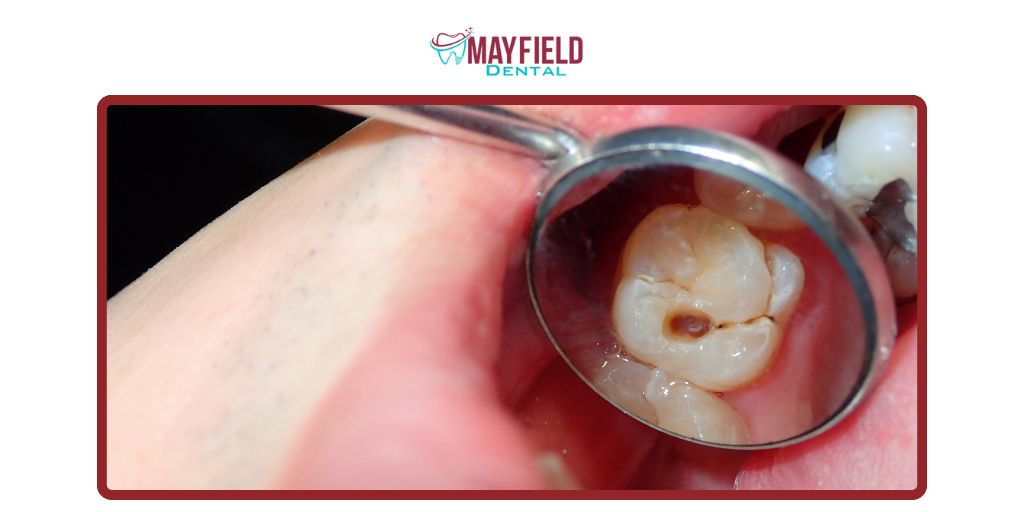
Not all cavities hurt; many are silent until advanced.
Common signs include:
- Sensitivity to sweet, hot, or cold foods
- Discomfort when chewing
- Visible pits or dark spots
- Persistent bad breath
- Rough or sharp areas on the tooth
Adults may also develop root cavities, especially with gum recession.
What Happens If You Ignore a Cavity
Unchecked decay can progress quickly.
Possible consequences:
- Infection or abscess
- Pain requiring emergency care
- Root canal treatment
- Tooth loss
- Spread of bacteria impacting overall health
If you’re experiencing any sensitivity or changes in your teeth, book a cavity assessment with a Brampton dentist today; early treatment is always easier.
How to Prevent a Dental Cavity (Practical, Everyday Tips)
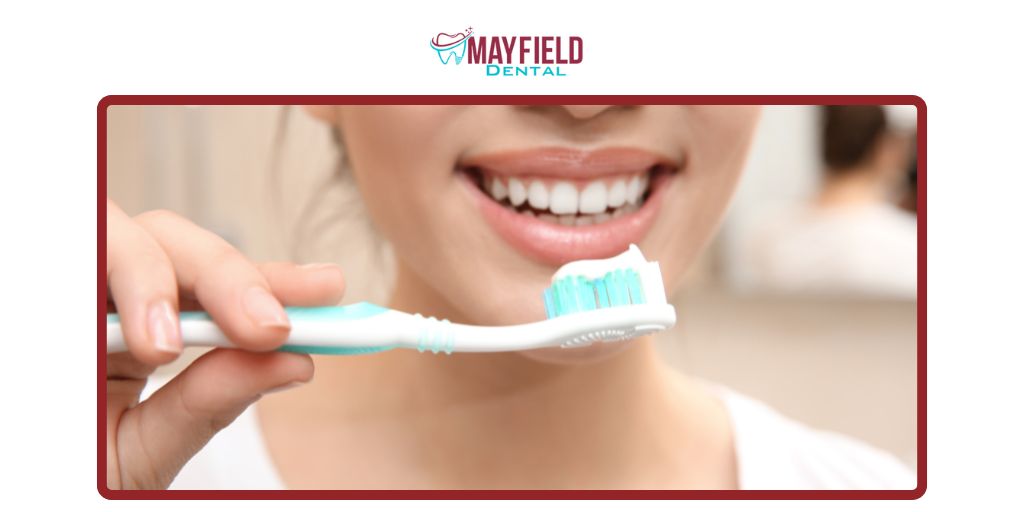
Daily Oral Hygiene Habits
Strong oral hygiene removes plaque and reduces acid attacks throughout the day.
Your daily prevention checklist:
- Brush twice daily using fluoride toothpaste
- Brush for a full two minutes
- Use gentle circular motions near the gumline
- Floss once a day to remove plaque between teeth
- Rinse with an antibacterial mouthwash if recommended by your dentist
- Replace your toothbrush every 3–4 months
Want to improve your home-care routine? Ask your hygienist during your next cleaning appointment; even small adjustments can dramatically reduce cavity risk. Schedule your consultation today!
Diet & Lifestyle Habits That Protect Teeth
Your eating habits play a major role in cavity development.
Here’s how to strengthen your prevention lifestyle:
- Reduce frequent snacking, especially sugary or sticky foods
- Choose water over soda, juice, or sports drinks
- Eat crunchy vegetables and fruits to stimulate saliva
- Limit acidic beverages like sparkling water and citrus drinks
- Avoid grazing, as each eating session creates a new acid attack cycle
Remember: it’s not just what you eat; it’s how often you eat it.
Role of Fluoride, Saliva & Regular Dental Visits
Your body and dental team work together to strengthen and protect teeth.
Important cavity-fighting supports include:
- Fluoride, which remineralizes enamel and reverses early decay
- Saliva, which neutralizes acids and protects enamel
- Regular checkups, which allow early detection and prevention
An expert dentist in Brampton can identify weak enamel areas, monitor cavity-prone teeth, and recommend personalized strategies, especially if your cavity risk is higher than average.
“Preventive dentistry isn’t about drilling, it’s about preserving what’s healthy,” says Dr. Nibal Kellow Pasat. “Our goal is to keep the natural tooth strong for as long as possible.”
Using Preventive Dental Visits to Reduce Cavity Risk
For more information, also read our blog on: What Happens During a Professional Teeth Cleaning at the Dentist?
During regular visits, your dentist or hygienist will:
- Remove plaque and tartar
- Evaluate enamel strength
- Check for early cavity signs
- Apply fluoride treatments or sealants if needed
- Offer guidance customized to your mouth’s needs
This is one of the most effective steps in cavity prevention.
When Cavities Occur — Modern Treatment Options
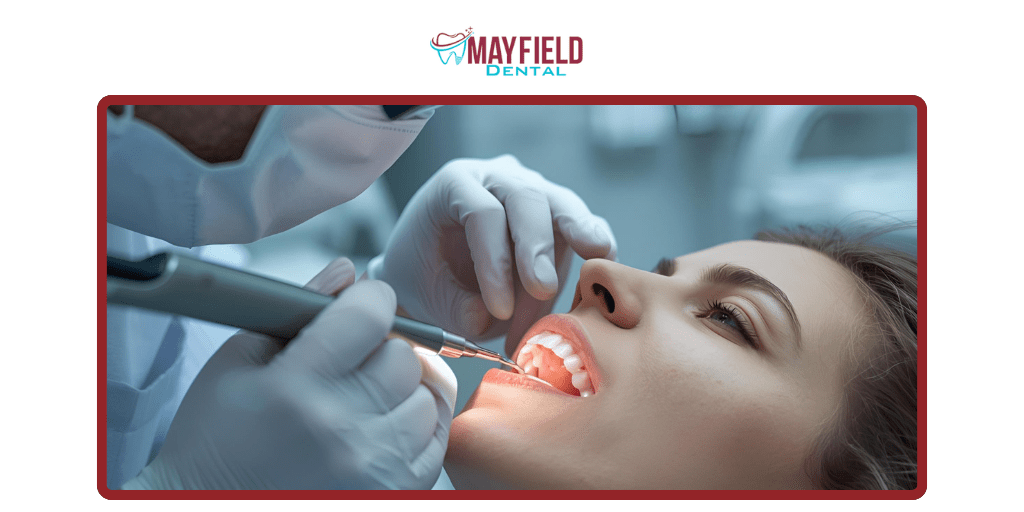
Dental Fillings & What to Expect (Cavity Filling Brampton)
When a cavity forms, a filling restores your tooth’s integrity.
Here’s what treatment typically involves:
- Local numbing for comfort
- Gentle removal of decayed tooth structure
- Placement of a custom filling (usually white composite)
- Bite adjustments for comfort
- Polishing for a natural look
Cavity filling services in Brampton prioritize comfort and natural aesthetics.
Minimally Invasive Approaches & Reinforcement Techniques
For early cavities or tiny enamel defects, your dentist may recommend:
- Remineralization treatments
- Fluoride varnishes
- Sealants on deep grooves
- Resin infiltration techniques
These treatments preserve more natural tooth structure.
Suspect a cavity? Don’t wait. Early, small fillings are faster, more comfortable, and more affordable than delayed treatment.
Key Takeaways: How to Keep Your Smile Strong
Cavities may be common, but they’re highly preventable. Here’s a quick recap:
- Cavities form gradually through repeated acid exposure
- Early signs can be subtle, so regular exams matter
- Strong hygiene, smart dietary habits, and fluoride are essential
- Professional visits reduce plaque, strengthen enamel, and detect decay
- Treatments like cavity filling in Brampton restore comfort and prevent complications
“Your smile is an investment. Every preventive choice you make today protects you from tomorrow’s dental problems,” shares Dr. Nibal Kellow Pasat.
Ready to protect your smile? Book your next appointment at Mayfield Dental in Brampton, your partners in long-term, cavity-free oral health.
Book Your Appointment Today | Protect Your Teeth With Expert Cavity Care in Brampton
If you’ve noticed sensitivity, discoloration, or think a cavity may be forming, don’t wait. Early care is easier, faster, and far more comfortable. Schedule your next checkup or cavity filling in Brampton and give your smile the long-term protection it deserves. Mayfield Dental serves Mayfield West, Heart Lake, Castlemore, Bramalea, and the surrounding Caledon communities.